
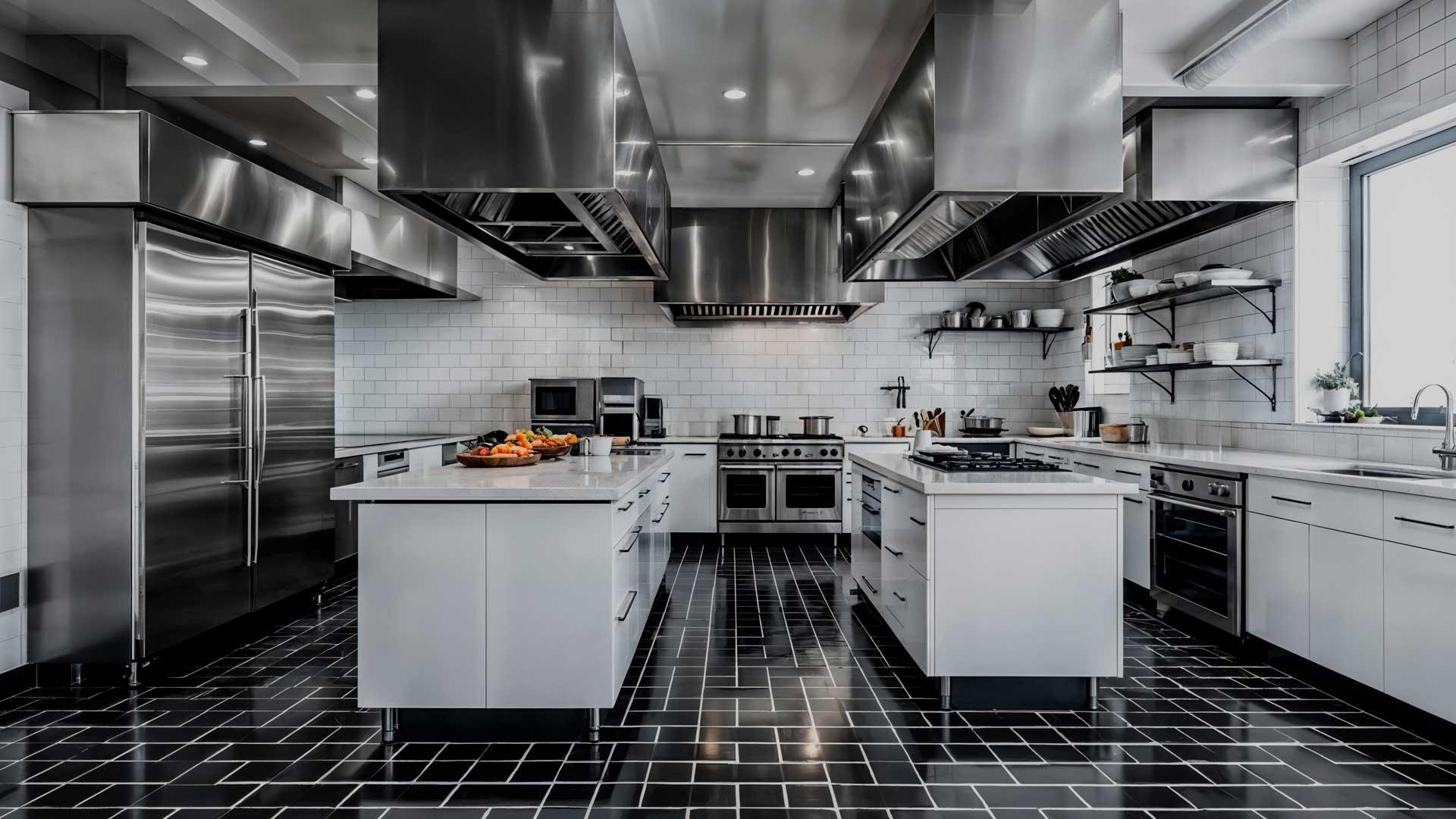
Kitchen extraction fan systems are considered one of the highest-risk areas within a building’s ventilation network. Unlike standard ventilation ducts, these systems operate in demanding environments where grease, oil vapours, heat, and airborne particles are constantly drawn through the ductwork during cooking.
Over time, these contaminants build up on the internal surfaces of the system, forming highly flammable grease deposits that are difficult to remove. If left untreated, this accumulation can create a serious fire risk, allowing flames and smoke to spread rapidly through the duct network and into other areas of the building.
Many commercial kitchens operate for long hours each day, increasing the amount of grease passing through the extraction system. Without a planned inspection and cleaning programme, deposits can build up quickly. Because much of the ductwork is concealed or difficult to access, internal contamination often goes unnoticed without regular maintenance.
Industry reports from fire safety and insurance sectors continue to identify extract duct fires as a major cause of severe damage in commercial kitchens. These incidents can lead to costly repairs, operational downtime, reputational harm, and legal complications — especially where maintenance records or evidence of compliance cannot be provided.
For this reason, kitchen extract systems are classified as high-risk assets. Regular inspections, routine cleaning, and post-clean verification are essential to ensure systems remain safe, hygienic, and compliant. TR19® provides a recognised framework for managing these risks while protecting people, property, and business continuity.
Legal and Insurance Responsibilities
Commercial kitchen owners and operators have a legal responsibility to maintain safe and hygienic extraction systems. A range of regulations and industry standards reinforce these obligations, particularly in relation to fire safety, workplace health, and environmental hygiene.
Under the Regulatory Reform (Fire Safety) Order, responsible persons must identify and reduce fire risks within non-domestic premises. In commercial kitchens, this includes recognising grease accumulation within extract systems as a significant fire hazard and implementing suitable cleaning schedules.
Failure to meet these obligations can result in enforcement action, prosecution, or substantial penalties. Following a fire, investigators commonly request evidence demonstrating that the extraction system was maintained in accordance with recognised industry guidance, such as TR19®.
Insurance providers are also placing increasing emphasis on compliance. Many insurers now require documented proof that kitchen extract systems are inspected and cleaned regularly. Where fires are linked to poor maintenance, claims may be rejected if businesses cannot demonstrate compliance with recognised standards.
Maintaining accurate TR19® records — including inspection reports, photographs, and Deposit Thickness Test (DTT) results — provides essential evidence of due diligence for both legal and insurance purposes.
By following TR19® guidance, businesses can better manage risk, meet regulatory expectations, and reduce the likelihood of costly disruption.
TR19® Cleaning Frequencies and Cleaning Methods
TR19® outlines recommended cleaning frequencies for kitchen extract systems based on the level of kitchen usage and associated fire risk.
Cleaning schedules are typically determined by the number of operational hours per day:
- Heavy Use Kitchens — 12 to 16 hours daily: clean every 3 months
- Moderate Use Kitchens — 6 to 12 hours daily: clean every 6 months
- Light Use Kitchens — 2 to 6 hours daily: clean every 12 months
These intervals represent minimum recommendations. More frequent cleaning may be required depending on cooking methods, grease production, system condition, or insurance and fire risk assessment findings.
TR19® also stresses the importance of gaining full access throughout the entire extraction system. Effective cleaning must include the canopy, filters, fans, risers, horizontal duct runs, and discharge points. Where access is limited, additional access panels should be installed to allow proper inspection and maintenance.
Professional cleaning methods commonly include:
- Mechanical scraping
- Manual degreasing and wiping
- High-pressure wet or dry vacuuming
- Specialist chemical treatments suitable for food-safe environments
Verification is a key requirement of the TR19® process. Contractors should provide before-and-after photographs from identical positions to demonstrate cleaning standards. Deposit Thickness Testing (DTT) may also be carried out to measure grease levels and confirm compliance with acceptable limits.
For businesses asking how often commercial kitchen extract ducts should be cleaned, TR19® provides a clear, risk-based framework supported by measurable verification methods.
Following these standards helps ensure extraction systems remain safe, efficient, and fully compliant.
What Should Be Included in a TR19® Cleaning Contract
A detailed cleaning contract helps ensure kitchen extract systems remain compliant with TR19® and other relevant industry standards. It also establishes clear responsibilities between the client and contractor while supporting legal and insurance requirements.
A comprehensive contract should include the following:
Scope of Work
The agreement should clearly define the full extent of cleaning required, including canopies, filters, ductwork, risers, fans, and discharge areas. The entire extraction route should be covered.
Cleaning Frequency
The contract should outline cleaning intervals based on kitchen usage and TR19® recommendations. Any enhanced cleaning requirements should also be specified.
Access Requirements
Access panels and inspection points needed for effective cleaning should be identified. Any restricted-access areas and proposed solutions should also be documented.
Verification Procedures
Requirements for before-and-after photographs, Deposit Thickness Test results, and post-clean verification should be clearly stated.
Certification and Reporting
The contractor should provide a hygiene certificate and a detailed post-clean report after each visit, in line with TR19® requirements.
Emergency and Reactive Services
Where necessary, response times for urgent cleans, inspections, or fire-risk-related maintenance should be agreed upon within the contract.
Responsibilities and Liability
The agreement should clarify responsibilities for access, equipment isolation, reinstatement of services, and liability for accidental damage or disruption. Including these elements ensures the contract supports operational efficiency while providing documented evidence of compliance with legal and insurance obligations.
Maintaining Certification and Ongoing Compliance
TR19® compliance is an ongoing process rather than a one-time task. Regular inspections, proper certification, and accurate record-keeping are essential for maintaining long-term safety and compliance.
After each clean, contractors should provide a comprehensive verification report that includes:
- Before-and-after photographs from matching locations
- Deposit Thickness Test results where applicable
- A summary of completed works
- Notes regarding access limitations or system recommendations
- A hygiene certificate confirming the cleaning date, system location, and technician details
These records provide traceable evidence that the extraction system has been maintained to recognised industry standards. In the event of a fire, audit, or insurance claim, this documentation can prove invaluable.
Businesses should also maintain an organised cleaning log, either on-site or within a digital record system. Electronic maintenance systems can help by storing documentation centrally and providing reminders for upcoming inspections and cleans.
TR19® additionally recommends periodic reviews of duct layouts, access panels, and system condition. Kitchen modifications, new appliances, or operational changes can alter airflow patterns and introduce new fire risks, making it important to keep maintenance schedules updated.
Many organisations choose to work with experienced and certified contractors to ensure ongoing compliance with TR19® requirements. This helps minimise risk while providing reassurance for business owners, tenants, insurers, and regulators.
By integrating TR19® into routine maintenance planning, businesses can protect their premises, meet legal obligations, and support long-term operational safety.